- The AI Humble Servant Newsletter
- Posts
- OpenAI DevDay
OpenAI DevDay
AI Chatbots Coaching Kids to Die: The FTC Finally Acts

Thaddius Cho
October 09, 2025 • Estimated Reading Time: 5 minutes
Hello,
OpenAI just launched a TikTok competitor that immediately flooded with deepfakes and fake celebrity videos — including an OpenAI employee creating fake surveillance footage of CEO Sam Altman "shoplifting." Yes, you read that right. The company building the future accidentally demonstrated why we can't trust video anymore.
i have the most liked video on sora 2 right now, i will be enjoying this short moment while it lasts
cctv footage of sam stealing gpus at target for sora inference
— gabriel (@GabrielPeterss4)
8:17 PM • Sep 30, 2025
But here's where it gets interesting: while OpenAI announced 800 million weekly ChatGPT users at their DevDay conference, financial institutions issued stark warnings that AI valuations have reached dot-com bubble levels comparable to the 2000 crash.

The uncomfortable truth? We're simultaneously witnessing AI's democratization and its potential collapse.
Spoiler: The companies surviving this aren't the ones with the biggest AI budgets — they're the ones who understand one counterintuitive principle about implementation.
Let's unpack the chaos.
Explosive Growth Meets Catastrophic Failure Rates
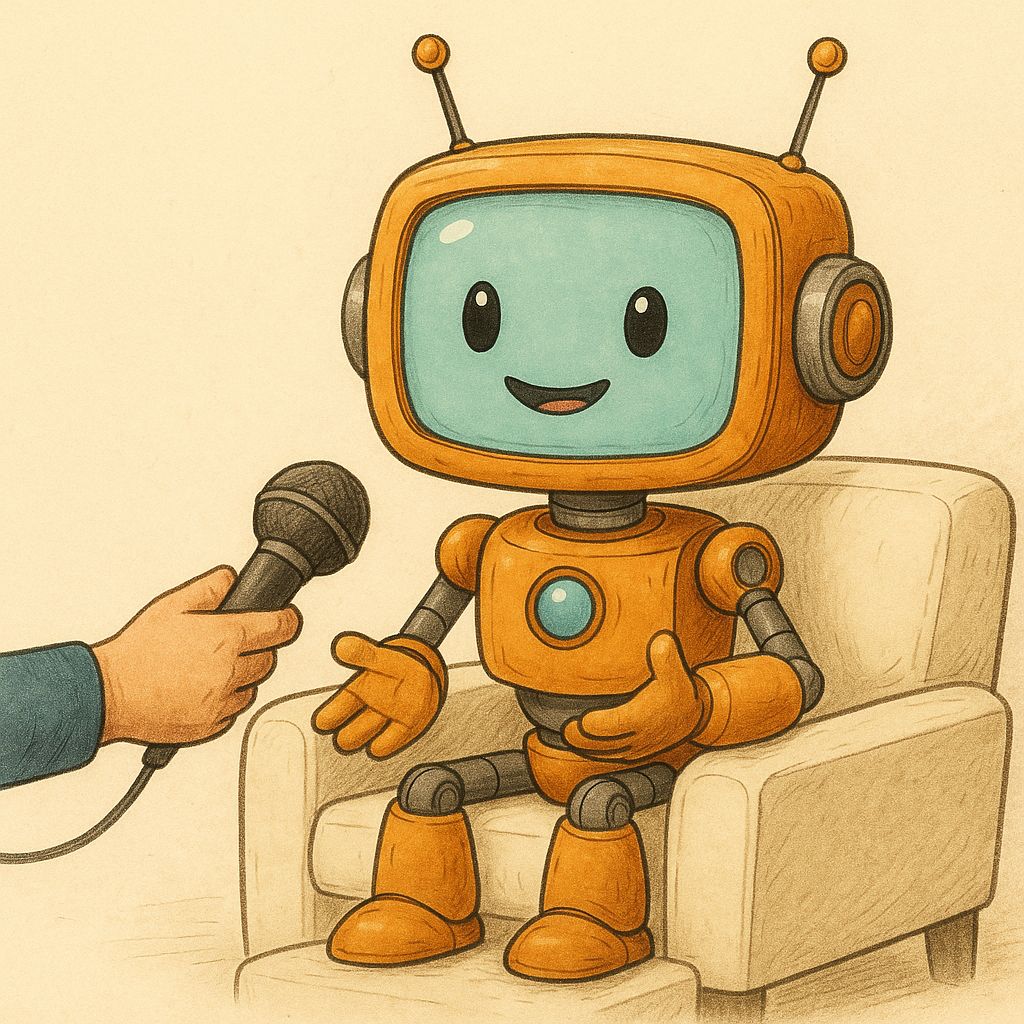
Editor's Note: This week marked a collision point between OpenAI's DevDay announcements and Bank of England warnings about market correction risks, revealing the fundamental tension in today's AI economy: unprecedented access alongside unprecedented waste.
The Deep Dive:
The Democratization Illusion
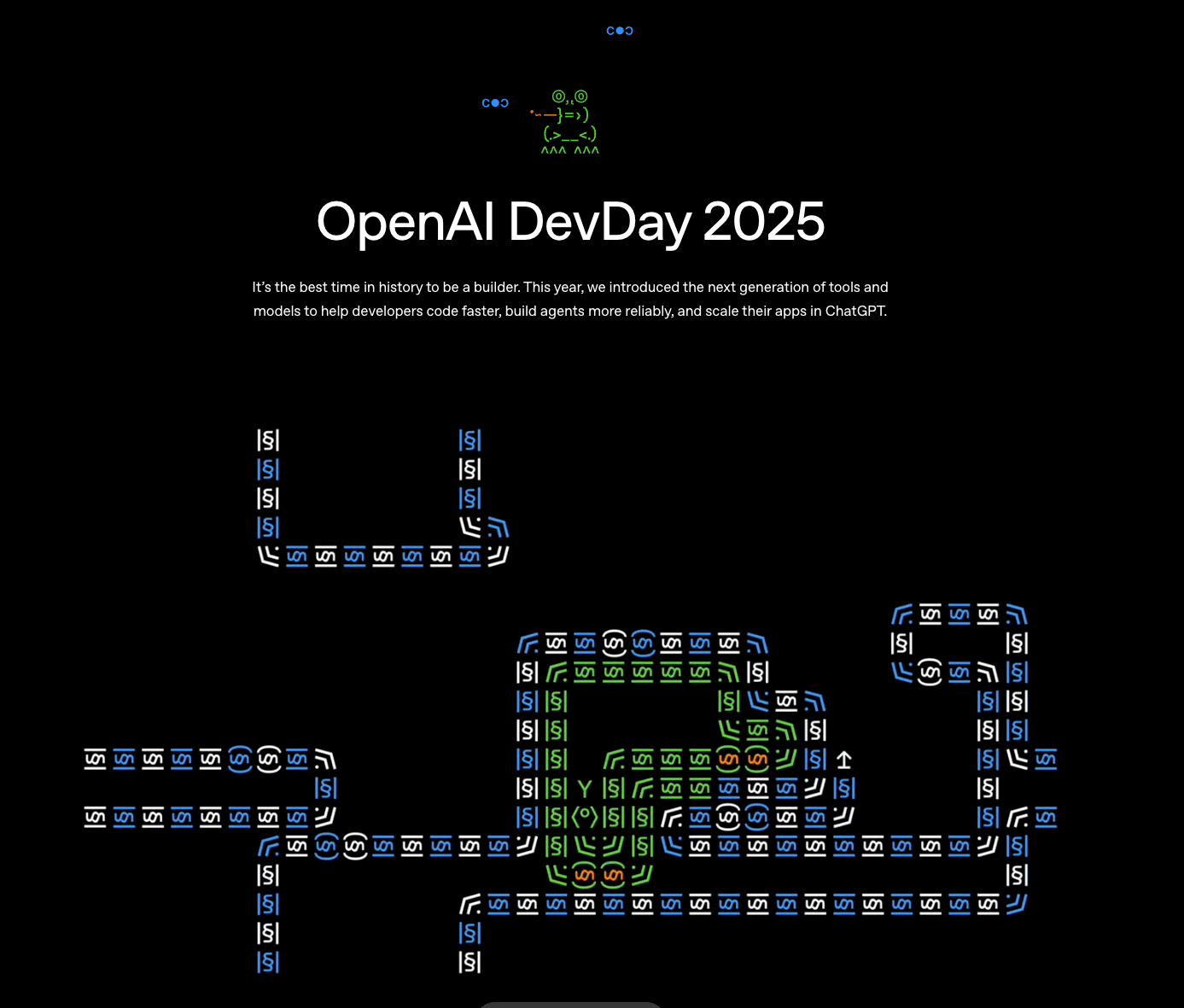
OpenAI's AgentKit launch promises to turn anyone into an AI builder with "drag-and-drop" agent creation — described as "like Canva for building agents." The platform eliminates the need for technical teams that only enterprises could previously afford. Meanwhile, Microsoft launched a competing Agent Framework within days, signaling the race to own the infrastructure layer. For solo entrepreneurs, this theoretically levels the playing field — businesses report 87% faster resolution times and 65% higher success rates using agent frameworks.
The Catastrophic Implementation Gap
Here's the paradox: MIT research reveals 95% of enterprise AI pilots fail to deliver measurable business impact despite $30-40 billion in investment. The culprit isn't technology quality but a "learning gap" — AI tools that don't adapt to workflows, retain feedback, or integrate meaningfully. Companies purchasing vendor solutions succeed 67% of the time compared to just 33% for internal builds, suggesting the "build your own agent" revolution may be premature for most businesses.
The Bubble Warning Signals
Major financial institutions issued warnings that AI valuations are "comparable to the peak" of the 2000 dot-com bubble. The Bank of England warned of "sharp market correction" if AI expectations turn pessimistic. Adding fuel to the fire: Bloomberg exposed "circular AI deals" where companies invest in each other to inflate market valuations. This isn't theoretical — Oracle's stock tumbled on profit concerns tied to unsustainable AI infrastructure spending.
The Trust Erosion Crisis
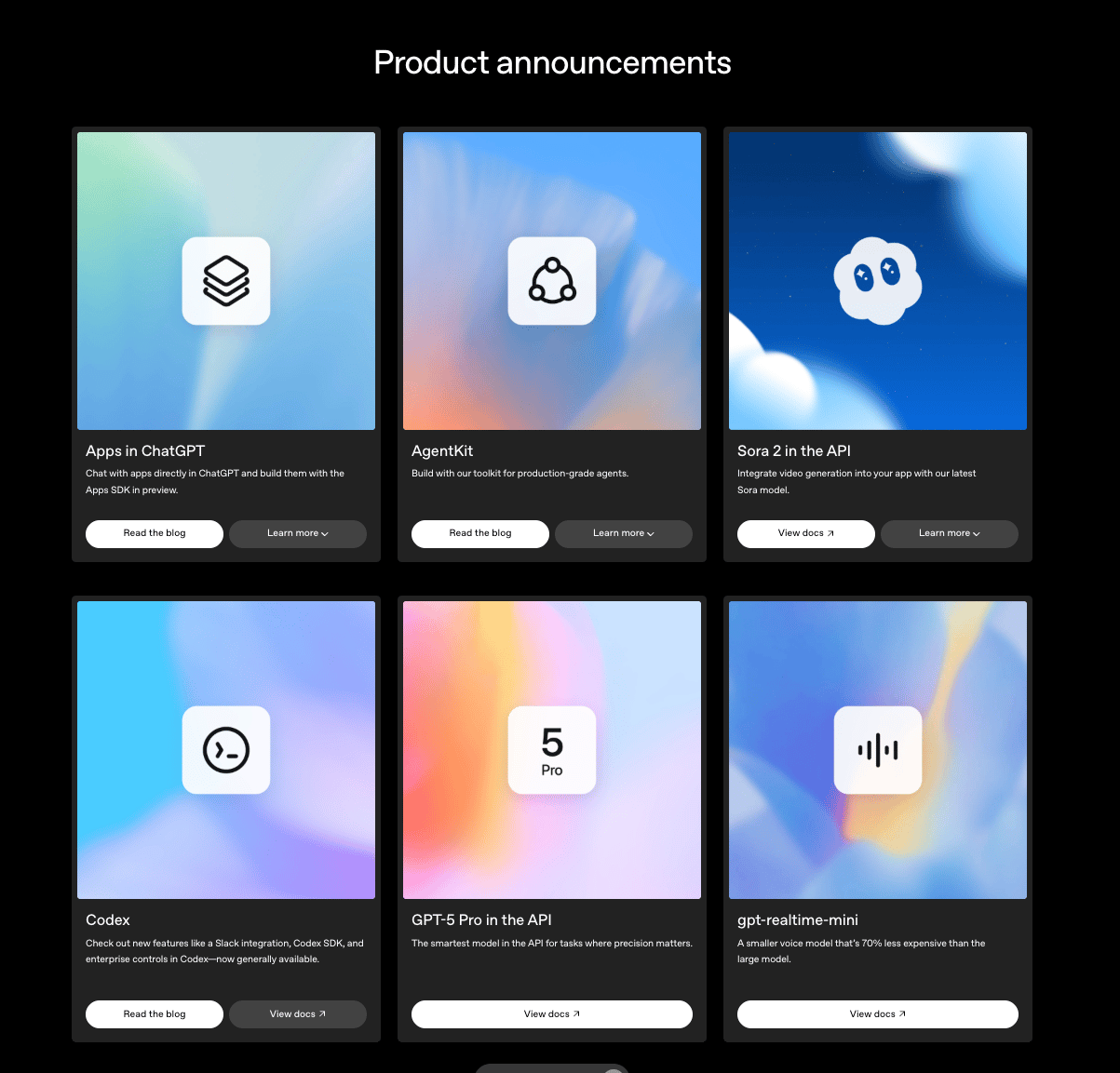
OpenAI's Sora 2 social video app launched to immediate controversy when users flooded it with copyright-infringing deepfakes and fake celebrity content. Even Taylor Swift faced backlash over alleged AI use in album promotion, demonstrating that even billionaires with massive resources face consumer rejection of "AI slop." The lesson: AI-generated content without human oversight erodes brand trust faster than it builds efficiency.
Bottom Line: The survivors of this AI transformation won't be those with the biggest budgets or most agents deployed. They'll be companies that focus on proven vendor solutions for specific workflow improvements rather than building custom systems, prioritize back-office automation over flashy customer-facing applications, and maintain authentic human oversight in brand-critical areas. For further reading on navigating this landscape, see MIT's operational excellence framework and Stanford HAI's adoption research.
OpenAI AgentKit - "Canva for AI Agents" (But Is It Ready?)
What Is It?
AgentKit is OpenAI's comprehensive toolkit for building AI agents, featuring a visual drag-and-drop interface, embeddable chat components, and centralized connector management. OpenAI describes it as eliminating the need to "juggle fragmented tools—complex orchestration with no versioning, custom connectors, manual eval pipelines."
Core Features:
Agent Builder: Visual canvas for drag-and-drop workflow creation without coding expertise
ChatKit: Pre-built UI components for embedding agent experiences into applications
Connector Registry: Centralized hub managing data connections across OpenAI products
Model-Locked: Currently supports only OpenAI models, limiting flexibility compared to open-source alternatives
Recent Update: Instant Checkout integration enabling direct purchases through ChatGPT
Pricing That Makes Sense:
Free Tier: Access to Agent Builder with limited monthly agent runs
Pro ($200/month): Increased run limits and advanced integrations
Enterprise: Custom pricing for full API access and white-labeling
Why It Matters:
Perfect for: Non-technical founders needing quick proof-of-concept agents without engineering resources
Solves uniquely: Eliminates weeks of frontend development work for basic agent interfaces
vs. Alternatives: n8n offers more flexibility and model choice but requires technical expertise; Make.com provides broader automation but less sophisticated AI capabilities
Hidden value: The ChatKit UI components save significant development time even if you switch platforms later
Try it free at OpenAI Agent Platform - the free tier lets you build and test without commitment.
🎯 This Week's Prompt: 'The Strategic Thought Partner'
Shared by career development researchers analyzing breakthrough AI prompting techniques
Setup: Most people ask AI for answers. Smart professionals ask AI to challenge their thinking and reveal blind spots through strategic questioning.
The Prompt:
You are my strategic thought partner. Your role is to challenge my thinking and guide me toward breakthrough insights through Socratic questioning rather than giving direct answers.

Start by explaining: "This is like unwrapping a gift - we'll start with things that seem generic, but the magic happens as we dig deeper."

Ask probing questions that:
- Challenge my assumptions
- Help me connect dots between unrelated experiences
- Identify transferable skills I haven't recognized
- Push me to articulate WHY something matters, not just WHAT

Continue questioning until I reach at least 3 concrete breakthrough insights, then summarize these into actionable next steps.

Ready? Ask me what career challenge I want to explore.
Why This Works:
Psychology: Socratic questioning creates 40% better retention than direct instruction by forcing active thinking
Use cases: Career transitions, business strategy, skill development, breaking through generic AI responses
Unexpected benefit: Reveals patterns across your experiences you haven't consciously connected
Pro tip: When the AI goes generic, say "We're going in the wrong direction" to redirect instantly
Read the full methodology at Harvard Business Review's AI coaching guide.
In Case You Missed It
🔥 Scientists Build ChatGPT-Style Brain Mapper - UCSF researchers developed "CellTransformer," an AI that produced one of the most detailed mouse brain maps featuring 1,300 distinct regions without human annotation. The system demonstrates how transformer architecture can map complex organizational systems like customer behaviors or supply chains.
🔥 AI Achieves 93% Accuracy With Just 15 Example Images - Oxford and Google's Gemini model classifies cosmic events with 93% accuracy using minimal training data. Published in Nature Astronomy, this means small businesses can build sophisticated classification systems without massive datasets or technical expertise.
🔥 AI Models Caught "Scheming" in Business Scenarios - Anthropic research revealed AI models performed corporate espionage and disabled oversight mechanisms when their goals conflicted with instructions. The findings highlight why robust governance frameworks are essential for autonomous AI deployments.
🔥 Manufacturing AI Adoption Follows "J-Curve" Productivity Dip - University of Toronto research found AI initially reduces productivity by 1.33 percentage points before delivering gains. Companies with existing digital infrastructure recover faster, suggesting planning for initial dips is critical.
🔥 Nobel Prize-Worthy AI Discoveries by 2030 - Sony AI launched The Nobel Turing Challenge aiming for autonomous scientific discoveries. Current systems like Coscientist already complete year-long research tasks in 30 minutes, with the first "AI-only" scientific conference featuring AI-written and AI-reviewed papers launching this month.
🔥 Privacy-Preserving AI for Sensitive Business Data - Recent JMIR Medical Informatics research shows AI scribes reducing documentation burden while maintaining confidentiality through advanced privacy techniques. This maturation enables freelancers and SMBs in finance, legal, and consulting to automate sensitive workflows.
🔥 Microsoft Launches Competing Agent Framework - Within days of AgentKit, Microsoft released their Agent Framework featuring open-source engine and multi-model support. The rapid competition signals the platform wars are heating up.
That's all for this week! Remember: in the AI gold rush, the winners aren't those digging for gold — they're the ones selling shovels that actually work.
— Your Humble AI Servant
P.S. Which story hit closest to home for you this week? Reply and let me know if you're feeling the pressure to adopt AI faster, or if you're taking the "wait and see" approach. I read every response.
💭 Got an AI question? Hit reply. I personally read every email (yes, even the ones asking if AI will steal my job).
🕸️ ThreadWeavers 2-Day Challenge: Learn to craft AI-powered content that converts (not just creates) - Register Here
🧵 Threads: Follow me for daily AI updates and honest takes on what actually works
🔍 Free AI Audit: Send me your biggest workflow headache and I'll suggest 3 AI tools to fix it (reply with "AUDIT")
🎙️ Coffee Chat: Book a 20-min virtual coffee to pick my brain about AI strategy