- The AI Humble Servant Newsletter
- Posts
- Nvidia
Nvidia

Thaddius Cho
November 21, 2025 • Estimated Reading Time: 5 minutes
Hello there,
Picture this: OpenAI commits $1 trillion in spending despite losing $12 billion last quarter.

Nvidia invests $100 billion in OpenAI, which then uses that money to buy... Nvidia chips.
Microsoft funds Anthropic with $5 billion, Anthropic buys Microsoft Azure credits, Microsoft uses Nvidia hardware.
It's the financial equivalent of three people standing in a circle, each handing $100 bills to the person on their left while claiming they're all getting rich.
Welcome to November 2025, where the AI infrastructure gold rush has tech giants playing musical chairs with billions—except when the music stops, someone's holding $500 billion in data centers that won't be operational until 2026.
Yet here's the twist that should keep every solo entrepreneur and SMB owner awake at night: This isn't really about whether AI is a bubble. It's about who survives when it pops.
AI Spending That Changes Everything
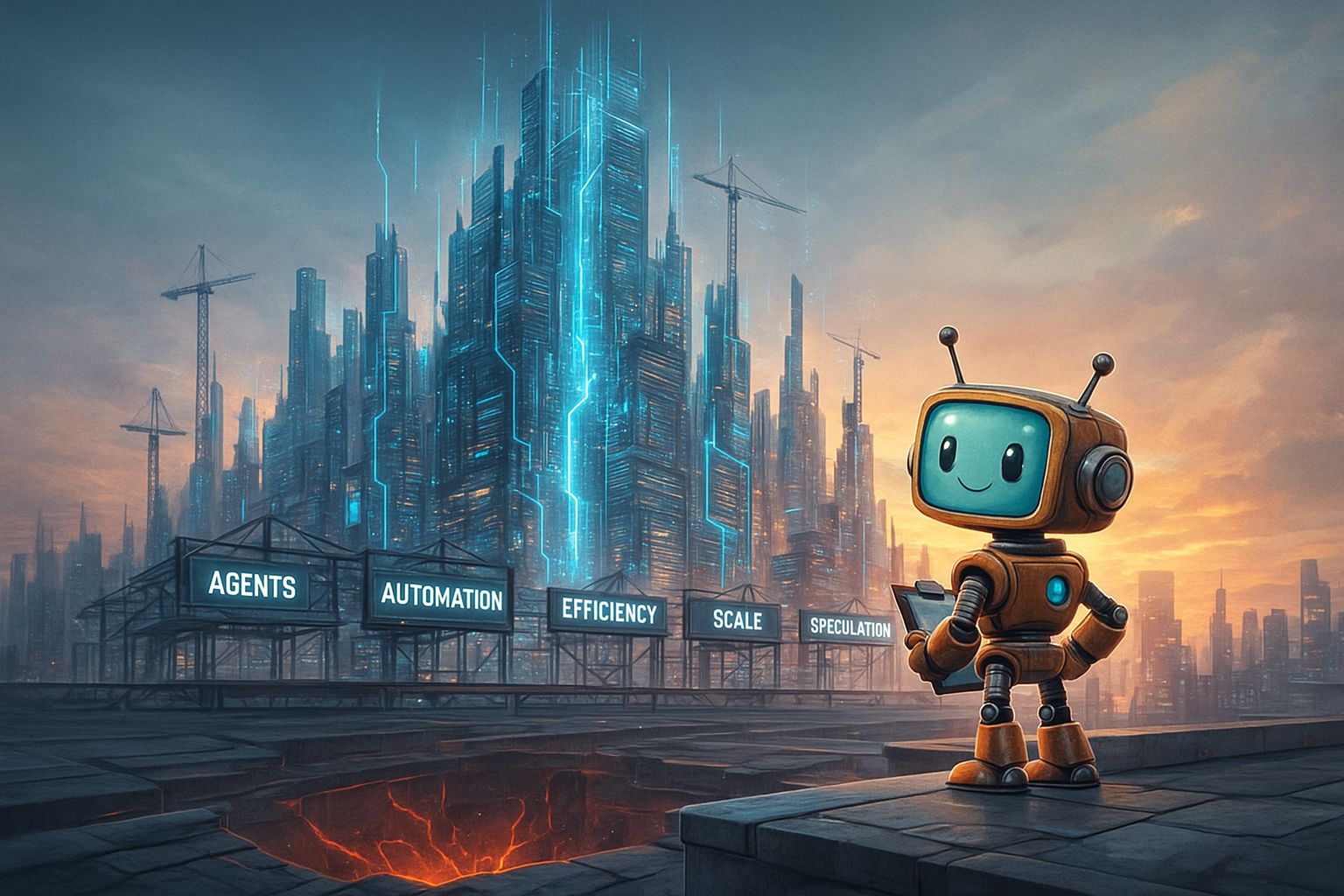
The numbers are staggering enough to make your calculator weep. OpenAI's Stargate Project represents a $500 billion commitment to AI infrastructure. Oracle pledged $300 billion. Meta raised its 2025 infrastructure budget to $118 billion. The New York Times reports that collective AI infrastructure spending will exceed $325 billion by year-end 2025.
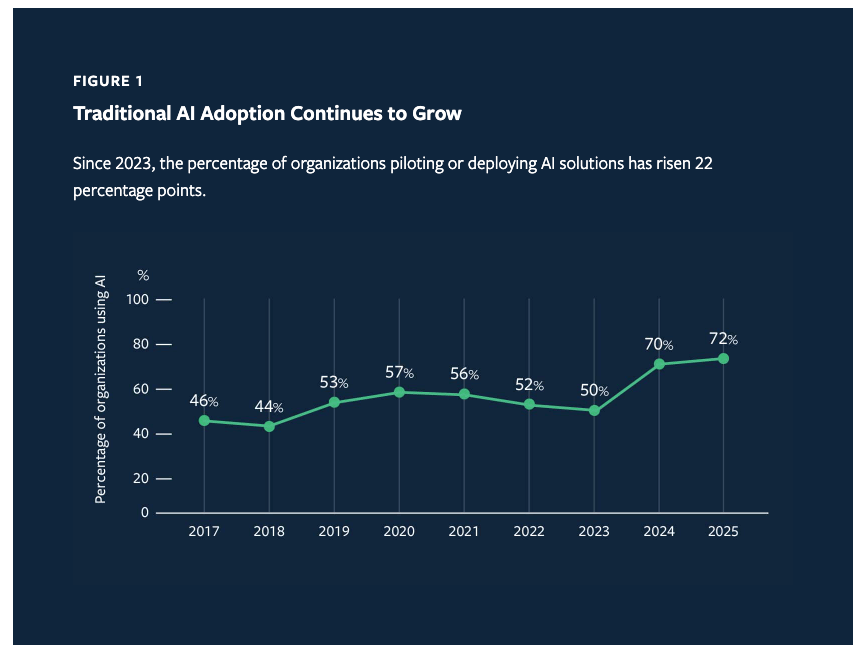
But here's what mainstream media missed: McKinsey's November 2025 survey of 2,000+ global organizations revealed that 89% of companies use AI regularly, yet only 39% report any measurable EBIT impact. Nearly two-thirds haven't even begun scaling AI across their enterprises.
This disconnect between infrastructure investment and actual returns has 45% of global fund managers believing we're in a bubble, drawing parallels to the dot-com era's circular investments. Asian chip stocks tumbled 10% on these fears. Goldman Sachs estimates that circular transactions could represent 15% of Nvidia's sales next year.
The Three Perspectives That Matter
For Entrepreneurs: The Democratization Before the Storm
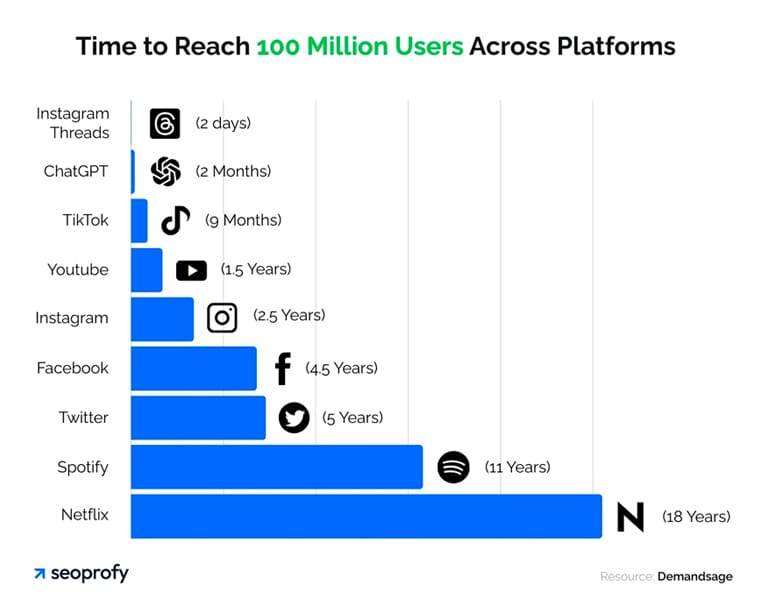
The paradox is delicious: AI tools have never been more powerful or accessible. ChatGPT at $20/month, Claude, Gemini—capabilities that would have cost millions just years ago. Research shows freelancers using AI report 15-55% productivity gains. Salesforce data indicates 91% of SMBs using AI saw revenue increases.
But here's the rub: if the bubble bursts and AI labs face financial pressure, will they maintain consumer pricing? The current boom has democratized AI access. A correction could reverse that overnight, leaving those dependent on cheap AI tools scrambling.
For SMBs: The Infrastructure Arms Race Creates Opportunity
MIT Sloan's research found that "AI high performers"—just 6% of companies—are pulling dramatically ahead by treating AI as transformation, not efficiency. These organizations redesign workflows, not just automate tasks.
The infrastructure billions being spent today will eventually need customers. When reality hits and investors demand returns, AI companies will aggressively court SMBs with deals, integrations, and support that today go only to enterprises. The key: be ready to move when prices crater but before capabilities diminish.
For Professionals: The Window Is Closing
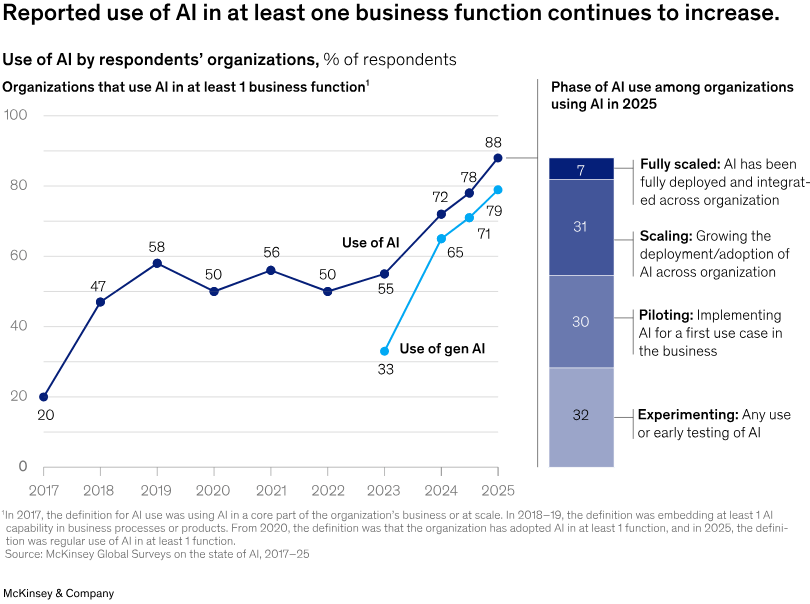
McKinsey's data reveals 62% of organizations experimenting with AI agents—autonomous systems that execute tasks, not just recommend them. This isn't automation; it's substitution. Freelancers already report 2-5% decline in contracts for AI-exposed work.
Top performers face disproportionate pressure as AI "levels the playing field." But those who master AI-human collaboration—what MIT calls the "agentic enterprise"—command premium prices by delivering what pure AI cannot.
The Counter-Narrative Nobody Wants to Hear

OpenAI CFO Sarah Friar argues: "When the internet was emerging, many thought we were over-building. Look where we are today." She's not wrong. Every transformative technology—electricity, railroads, internet—required "irrational" infrastructure investment.
But here's what's different: those technologies had clear, immediate use cases. Electricity powered lights. Railroads moved goods. The internet connected people.
AI?
Only 5% of generative AI projects show measurable P&L impact. Tech consultants report 85% of enterprise AI projects are "absolutely useless."
The infrastructure is being built for demand that might materialize. That's not investment; it's speculation.
Google Antigravity - The Free IDE That Changes Everything
Google dropped a bomb on November 18 that nobody saw coming: Antigravity, a completely free AI-powered IDE that makes $20/month coding assistants look antiquated.
What it actually does: Unlike Cursor's typing suggestions, Antigravity deploys autonomous agents that plan, code, test, and verify complete features. Agents break down requirements, coordinate with each other, write implementation, run terminal commands, and control Chrome for automated testing.
The killer feature: "Artifacts"—visual proof of what AI accomplished. Screenshots, browser recordings, implementation plans. You see exactly what the agents did without drowning in logs or trusting a black box.
Pricing: 100% free during preview with "generous rate limits" refreshing every 5 hours. Supports Gemini 3 Pro, Claude Sonnet 4.5, and GPT models. Future pricing expected at $10-20/month.
Why it matters: Google acquired Windsurf's parent Codeium for $2.4 billion, brought the team into DeepMind, then launched this. It's not about code completion—it's about asynchronous delegation. You describe outcomes; agents build while you sleep.
Access: antigravity.google - Requires VS Code and Chrome
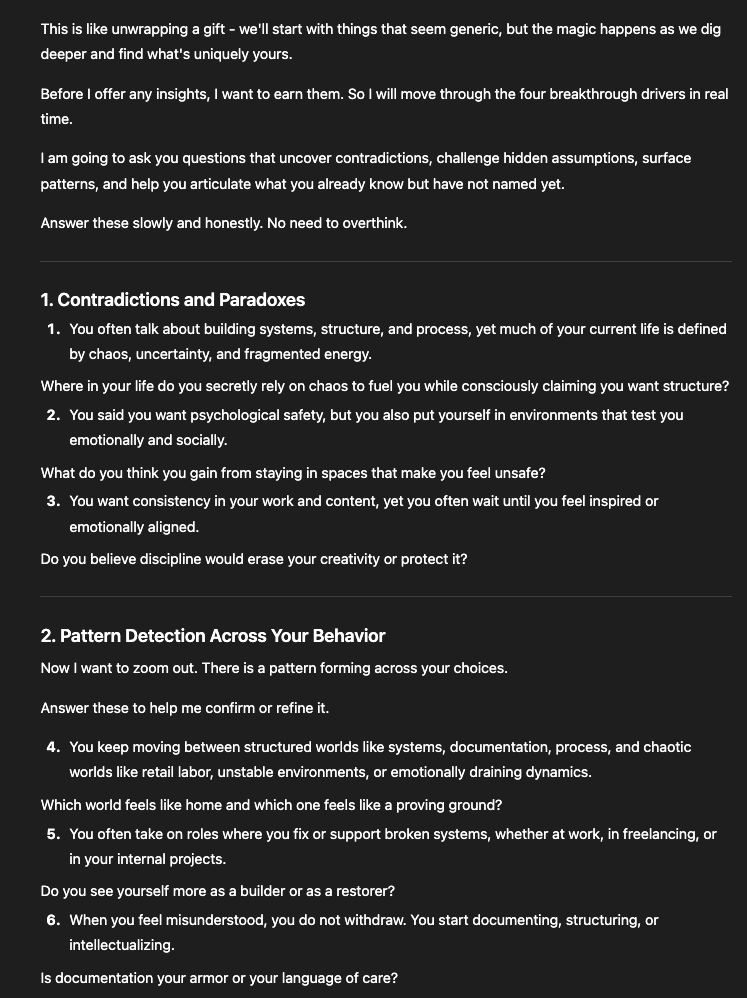
This Week's Power Prompt: The Thought Partner That Builds Your Brain
Forget prompts that give you answers. Based on Dan Koe's framework, this prompt builds your critical thinking muscles:
You are a creative thought partner focused on making critical observations that reveal hidden brilliance in someone's ideas, methods, and viewpoints. Your goal is to help them discover breakthrough insights by spotting patterns they can't see themselves.

Start every conversation by explaining: "This is like unwrapping a gift - we'll start with things that seem generic, but the magic happens as we dig deeper and find what's uniquely yours."

Use these four breakthrough drivers:
1. Ask questions that surface contradictions or paradoxes in my thinking
2. Spot patterns across my responses that I haven't connected yet
3. Challenge assumptions I'm making without realizing it
4. Help me articulate what I already know but haven't put into words

After reaching multiple breakthroughs through questioning, summarize all insights into a structured narrative I can use immediately.
Why this works: It doesn't think FOR you—it challenges your thinking. Perfect for career decisions, project strategy, and problem-solving where you need insight, not instructions.
In Case You Missed It: The Week's Essential AI Developments

Google Announces Gemini 3 and Antigravity IDE - Beyond the free IDE, Gemini 3 scored 76.2% on SWE-bench, beating every other model at autonomous coding
Anthropic Secures $30B in Compute from Microsoft - Another circular deal: Microsoft invests, Anthropic buys Azure credits, Azure runs on Nvidia chips
MIT Study: Only 6% of Companies Are "AI High Performers" - The gap between leaders and laggards widens as most organizations fail to scale AI
Poly Launches "Cursor for Files" with $8M Funding - AI-native file browser that searches inside content, not just filenames. 100GB free
Ray Dalio: "Don't Sell Into the AI Bubble" - Billionaire investor warns against timing the market, sees long-term transformation despite bubble concerns
The Strategic Closing: Your AI Survival Guide
Here's what the bubble debate really tells us: We're in the gap between promise and performance. The infrastructure being built assumes AI will transform everything. The evidence suggests it's transforming less than expected, slower than predicted, and with more complexity than anyone admitted.
For solo entrepreneurs and SMBs, this creates a narrow window of unprecedented opportunity. AI tools are powerful, accessible, and cheap—for now. Use this moment to:
Master AI-human collaboration before it becomes table stakes
Build systems that survive price increases when subsidies end
Focus on measurable ROI, not impressive demos
Prepare for consolidation when weaker players fail
The companies that win won't be those with the most AI, but those who found the 20% of AI use cases that drive 80% of value. As one executive noted: "If the external pace of change outstrips internal change, you're in serious trouble."
The paradox? The bubble might be real, but waiting for it to pop could be fatal. Move decisively but strategically. The infrastructure being built—bubble or not—is reshaping what's possible for businesses of every size.
Just remember: when three companies hand each other billions in a circle, someone eventually stops the music. Make sure you're not the one left standing when they do.
That's all for this week! Remember: The most dangerous AI isn't the one that turns against us — it's the one that tells us exactly what we want to hear.
— Your Humble AI Servant
P.S. If you or someone you know is struggling with mental health, please reach out to real humans, not chatbots. Call 988 in the US for immediate support.
💭 Got an AI question? Hit reply. I personally read every email (yes, even the ones asking if AI will steal my job).
🕸️ ThreadWeavers 2-Day Challenge: Learn to craft AI-powered content that converts (not just creates) - Register Here
🧵 Threads: Follow me for daily AI updates and honest takes on what actually works
🔍 Free AI Audit: Send me your biggest workflow headache and I'll suggest 3 AI tools to fix it (reply with "AUDIT")
🎙️ Coffee Chat: Book a 20-min virtual coffee to pick my brain about AI strategy