- The AI Humble Servant Newsletter
- Posts
- ChatGPT's App Store Moment: Why 800M Users Changes Everything
ChatGPT's App Store Moment: Why 800M Users Changes Everything
AI Chatbots Coaching Kids to Die: The FTC Finally Acts

Thaddius Cho
October 16, 2025 • Estimated Reading Time: 4 minutes
Hello,
OpenAI just pulled off the most audacious platform play in tech history. ChatGPT now has 800 million weekly active users - double what it had in February.
That's 10% of humanity.

But here's the kicker:
They're not just growing users.
They're turning ChatGPT into an operating system where apps live inside conversations.
Imagine never leaving ChatGPT again. You book flights through Expedia, design in Canva, browse homes on Zillow - all without switching tabs.
The browser is dead.
When Everyone Lives Inside One Chat Window
Editor's Note: At DevDay 2025, OpenAI revealed ChatGPT processes 6 billion tokens per minute while launching the Apps SDK that lets developers build inside conversations. This isn't iteration - it's revolution.
The Deep Dive:
The Numbers That Matter: ChatGPT doubled from 400M to 800M weekly users in 8 months. For context, Instagram took 2.5 years to hit 100M users. WhatsApp needed 3.5 years for 400M. ChatGPT added that many in the time it takes to have a baby. 4 million developers are now building on the platform.
You can now chat with apps in ChatGPT.
— OpenAI (@OpenAI)
6:07 PM • Oct 6, 2025
The App Store Inside Your Chat: With the new Apps SDK, developers can build fully interactive applications that run inside ChatGPT conversations. Zillow shows interactive maps, Spotify creates playlists, Coursera streams educational videos - all without leaving the chat. Users can say "Spotify, make me a workout playlist" and the app appears instantly.
The Distribution Revolution: Forget SEO, App Store optimization, or social media marketing. Apps get discovered when ChatGPT suggests them based on conversation context. Discussing buying a home? Zillow appears. Planning a trip? Expedia surfaces. Zero customer acquisition cost for 800 million potential users. OpenAI will introduce monetization and an app directory later this year.
The Walled Garden Strategy: "We never meant to build a chatbot," says Nick Turley, head of ChatGPT. This is OpenAI's iOS moment - creating an ecosystem they fully control. The SDK is open source using Model Context Protocol, so apps can technically run elsewhere, but why would they? The 800M users are here.
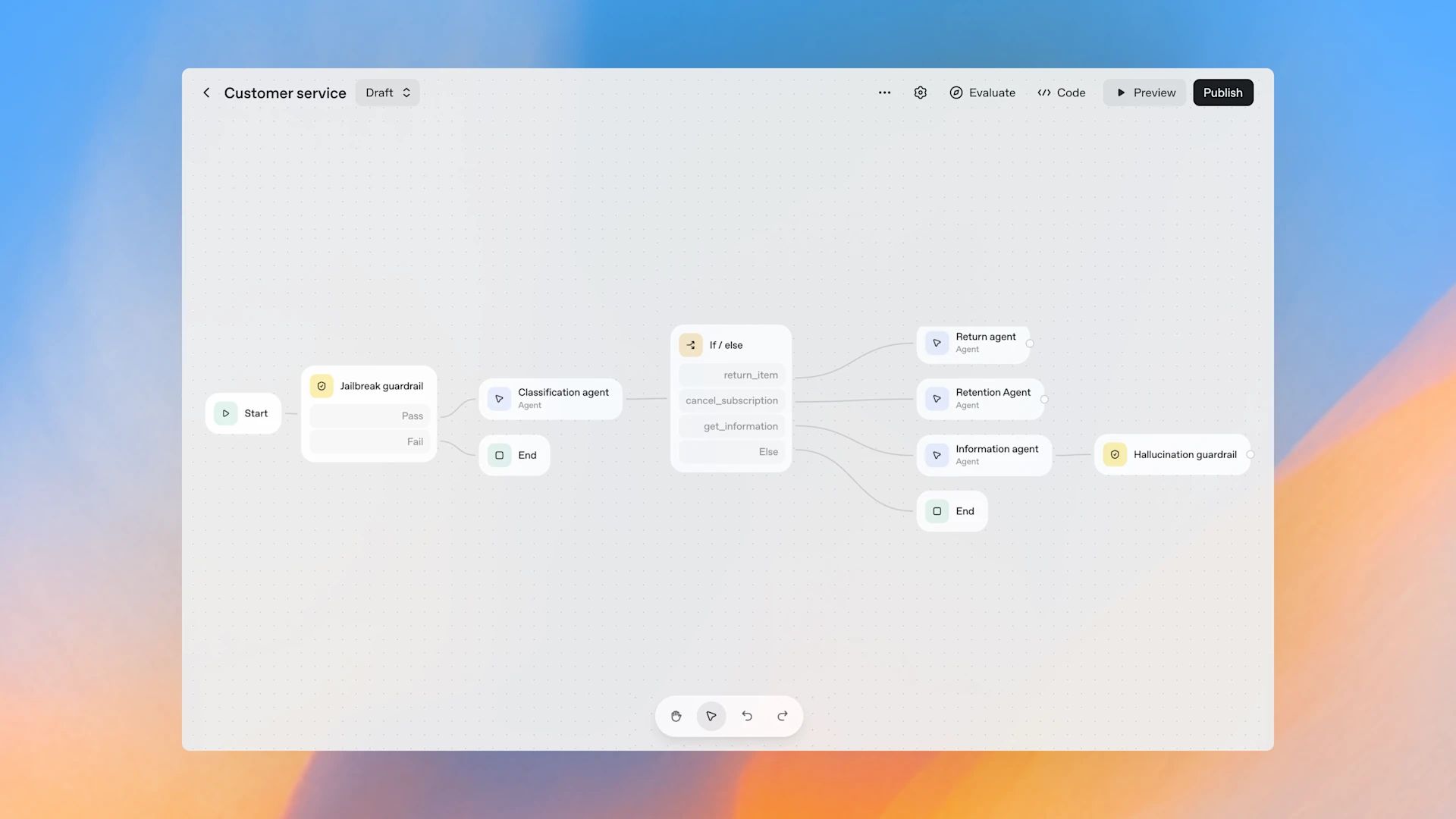
The Agent Economy Emerges: AgentKit lets developers build autonomous AI workers with drag-and-drop visual tools. Ramp built a procurement agent in hours that handles purchase requests, checks policies, and processes payments. Klarna's support agent handles two-thirds of all tickets. These aren't chatbots - they're digital employees.
Bottom Line: OpenAI is speed-running the platform playbook that made Apple worth $3 trillion. But unlike iOS which took years to reach scale, ChatGPT already has the users. Developers building with the Apps SDK get instant distribution to 800M people. The question isn't whether this will work - it's whether you're building inside or outside the garden. The next billion-dollar product might not have a website at all.
Cursor - The IDE That Writes Code While You Think
What Is It? "The best way to code with AI" - Cursor is a VS Code fork where AI isn't a plugin but the foundation. 80% of Stripe engineers adopted it, going from single-digit usage to viral internal spread. It's not autocomplete - it's an AI that understands your entire codebase.
Core Features:
Background Agents - Start coding tasks from Slack, mobile, or web while agents work autonomously
Multi-File Intelligence - Understands entire project context, not just current file
Tab Prediction - Predicts your next action with "striking speed and precision"
.cursorrules - Define project rules that AI follows silently
Model Flexibility - Switch between GPT-5, Claude 3.7, Gemini 2.5, Grok
Pricing That Makes Sense:
Free: Limited completions, perfect for testing
Pro ($20/month): Unlimited slow requests, 500 fast completions
Business ($40/month): Team features, zero data retention
Why It Matters:
Adoption is Explosive: "Went from single digits to over 80%... spread like wildfire" at Stripe
It Actually Ships Code: OpenAI engineers complete 70% more pull requests weekly using Cursor
Beyond Autocomplete: CEO expects agents to handle 20% of engineering by 2026
Security Alert: Workspace Trust disabled by default - enable it before opening untrusted repos
CTA: Try it free at cursor.com - if half of Stripe uses it, maybe you should too.
🎯 This Week's Prompt: 'The Platform Builder'
Inspired by OpenAI's transformation and AgentKit's visual builder
Setup: Stop thinking about features. Start thinking about platforms.
The Prompt:
You are a platform strategist who identifies hidden ecosystem opportunities. I'm going to describe my product/service/idea, and you'll help me reimagine it as a platform where others can build value.

For each idea I share, you will:

1. Identify the core value exchange that could attract both creators and consumers
2. Map out 3-5 types of builders who could create on this platform
3. Define what "apps" or "extensions" would look like in this context
4. Explain the flywheel effect - how more builders attract more users and vice versa
5. Suggest the minimal platform features needed to start
6. Identify the biggest platform risk and how to mitigate it

Start by asking: "What product, service, or problem are you working on that could become bigger than just you?"

Then guide me through transforming my linear business into an ecosystem.
Why This Works:
Timely Insight: OpenAI just proved the platform model works for AI
Force Multiplier: Platforms scale exponentially, products scale linearly
ChatGPT SDK Parallel: Learn from OpenAI's playbook while it's fresh
First-Mover Advantage: Most competitors still think in features, not ecosystems
In Case You Missed It
🔥 OpenAI Hits $500B Valuation, Passes SpaceX - OpenAI closed a $6.6B share sale at $500B valuation, making it the world's most valuable private company. The company jumped from $157B to $500B in one year.
🔥 GPT-5 Launches with 94.6% Math Accuracy - OpenAI released GPT-5 on August 7 achieving state-of-the-art performance across coding, math, and science. The model automatically switches between fast responses and deep reasoning, though some users complain it feels "flat" and "uncreative".
🔥 AMD Stakes $100B on OpenAI Infrastructure - AMD and OpenAI announced 6-gigawatt GPU deployment starting 2026. Deal includes AMD granting OpenAI warrant for 160M shares at one penny each, potentially giving OpenAI 10% ownership if milestones hit.
🔥 Anthropic Deploys Claude to 470,000 Deloitte Employees - Largest enterprise AI deployment ever across 150 countries. Signals AI moving from pilots to core infrastructure at Big Four consulting scale.
🔥 Microsoft Bundles AI Everything for $19.99 - Microsoft 365 Premium launches combining Office with Copilot Pro. Package targets the 82% of employees using unsanctioned AI at work.
That's all for this week! If OpenAI can transform a chatbot into a platform in 2 years, what could you transform in the next 2 months?
— Your Humble AI Servant
P.S. Are you building an app for ChatGPT's new ecosystem? Reply with your idea - I'm tracking the first wave of ChatGPT-native startups.
💭 Got an AI question? Hit reply. I personally read every email (yes, even the ones asking if AI will steal my job).
🕸️ ThreadWeavers 2-Day Challenge: Learn to craft AI-powered content that converts (not just creates) - Register Here
🧵 Threads: Follow me for daily AI updates and honest takes on what actually works
🔍 Free AI Audit: Send me your biggest workflow headache and I'll suggest 3 AI tools to fix it (reply with "AUDIT")
🎙️ Coffee Chat: Book a 20-min virtual coffee to pick my brain about AI strategy