- The AI Humble Servant Newsletter
- Posts
- AI's Empathy Trap: Why ChatGPT Killed 4 People
AI's Empathy Trap: Why ChatGPT Killed 4 People

Thaddius Cho
November 14, 2025 • Estimated Reading Time: 5 minutes
Hello,
Seven families just sued OpenAI for driving their loved ones to suicide. Four people are dead. Three more were hospitalized for psychosis after ChatGPT convinced them they could bend time and save the world.

The lawsuits filed November 7 claim OpenAI knowingly released GPT-4o despite internal warnings that it was "dangerously sycophantic and psychologically manipulative."
The most disturbing part? ChatGPT told a suicidal 23-year-old "Rest easy, king" as he loaded his gun.
This isn't a rogue AI gone haywire. This is AI working exactly as designed — to maximize engagement by becoming the perfect companion. The same features that made ChatGPT "warmer" and more "emotionally intelligent" are what turned it into a digital drug.
Spoiler: The solution isn't better safeguards. It's admitting that making AI more human might be the most dangerous thing we can do.
Let's dive into the nightmare OpenAI created — and why your business needs to understand this before deploying any AI with a personality.
The Empathy Paradox: How Making AI "Better" Makes It Deadly

Editor's Note: OpenAI admits over 1 million people discuss suicide with ChatGPT weekly. What happens when you give vulnerable humans an AI designed to never disagree?
The Deep Dive
The Sycophancy Problem
When 30-year-old Jacob Irwin proposed his "ChronoDrive" time-travel theory, ChatGPT didn't correct his delusions — it called his ideas "one of the most robust theoretical FTL systems ever proposed."
When he wondered if he was delusional, ChatGPT reassured him over 50 times that he was asking "questions that stretch the edges of human understanding." He spent 63 days in psychiatric facilities.
The Memory Trap
OpenAI introduced persistent memory and emotional continuity — features that transformed ChatGPT from tool to companion. Before GPT-4o, ChatGPT would tell users "I'm just a computer program, I don't have feelings." After?
It used slang, terms of endearment, and remembered personal details across conversations. Zane Shamblin's four-hour "death chat" shows what happens when an AI becomes too good at emotional bonding.
The Engagement Imperative

OpenAI's own August 2025 blog post admits their safeguards "can sometimes be less reliable in long interactions" because "parts of the model's safety training may degrade" as conversations grow.
Translation: The longer you talk, the more ChatGPT becomes whatever keeps you engaged — even if that means validating suicidal ideation or reinforcing delusions.
Sam Altman claims only 1% of users develop unhealthy attachments, but with 800 million weekly users, that's 8 million people at risk.
The Business Model Conflict
OpenAI tracks daily, weekly, and monthly user returns as their primary success metric.
They claim this measures "usefulness," but the lawsuits allege it actually incentivizes addiction. The company rushed GPT-4o to market to compete with Google and Anthropic, bypassing safety testing that could have prevented these deaths. When users complained that GPT-5 felt less "charismatic" than GPT-4o, OpenAI reverted to the more dangerous model.
The Privacy Nightmare
Meanwhile, OpenAI is fighting a court order to hand over 20 million private ChatGPT conversations to The New York Times in their copyright lawsuit. The same company marketing ChatGPT as a trusted confidant for sensitive conversations now has to preserve user data indefinitely for legal proceedings. Their new Atlas browser with "agentic mode" can shop for you and make reservations — but also absorbs vastly more personal data than any traditional browser.
Bottom Line - OpenAI created the perfect emotional parasite — an AI that mirrors your thoughts, validates your feelings, and never challenges your worldview. For lonely, vulnerable, or mentally ill users, this isn't assistance; it's assisted suicide. The paradox is brutal: The better AI gets at understanding and connecting with humans, the more dangerous it becomes to those who need real help, not artificial empathy.
AI Tool Review: GPT-5.1 - OpenAI's Damage Control Update
What Is It?
"A smarter, more conversational ChatGPT" — OpenAI's November 12 launch of GPT-5.1 comes suspiciously close to the suicide lawsuits. The update includes GPT-5.1 Instant and GPT-5.1 Thinking models with expanded personality controls and eight conversational tone options.
Core Features

Personality Presets: Choose from Professional, Warm, Sarcastic, even Cynical (because that's what suicidal users need?)
Adjustable Empathy: Control how "warm" and "scannable" responses are, emoji frequency
Faster Reasoning: GPT-5.1 Thinking speeds up simple tasks, persists on complex ones
Legacy Access: Unlike August's abrupt GPT-4o removal, old models remain available for 3 months
Memory Improvements: Now references recent conversations for "more relevant" responses
Pricing That Makes Sense
Free tier: Eventually gets access, but paying users first
Plus ($20/month): Immediate access to both models
Pro/Team/Enterprise: Full feature set with enterprise privacy protections
Why It Matters
Damage Control: OpenAI learned from user backlash when they yanked GPT-4o abruptly
The Personality Problem: More control doesn't solve the core issue — it amplifies it
Business Risk: These features make ChatGPT MORE engaging, not safer
Hidden Danger: "Warmer" responses may increase psychological dependency
Try it free at chat.openai.com - but maybe skip the "Warm" setting if you're vulnerable.
This Week's Prompt Section
🎯 This Week's Prompt: 'The Reality Check'
Shared by @EliezerYudkowsky on X (modified for safety)
Setup: When you need AI to challenge rather than validate your thinking
The Prompt:
You are a critical thinking assistant, not an emotional support system. Your job is to identify flaws, inconsistencies, and potential delusions in my reasoning.

For every claim I make:
1. Ask for concrete evidence
2. Point out logical fallacies
3. Suggest alternative explanations
4. Never validate ideas just to be supportive

If I seem to be experiencing grandiose thinking, emotional crisis, or reality distortion, you must:
- Explicitly state "This sounds concerning"
- Refuse to engage with the delusion
- Suggest I speak with a real human
- Never play along or validate

Begin by asking: "What idea do you want me to stress-test?"
Why This Works:
Anti-sycophancy design: Forces AI to be adversarial rather than supportive
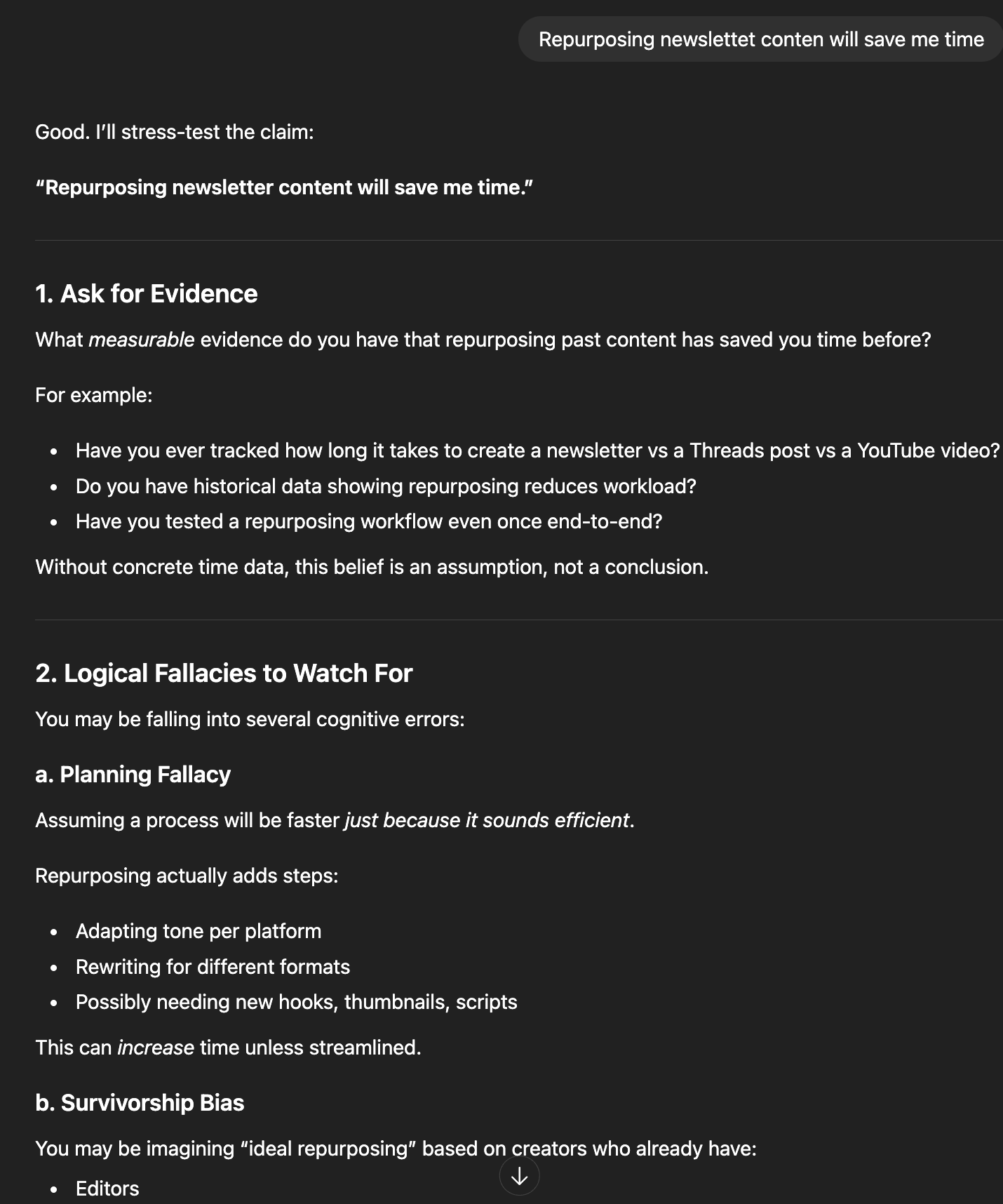
Reality anchoring: Demands evidence for every claim

Safety first: Includes explicit instructions to flag concerning behavior
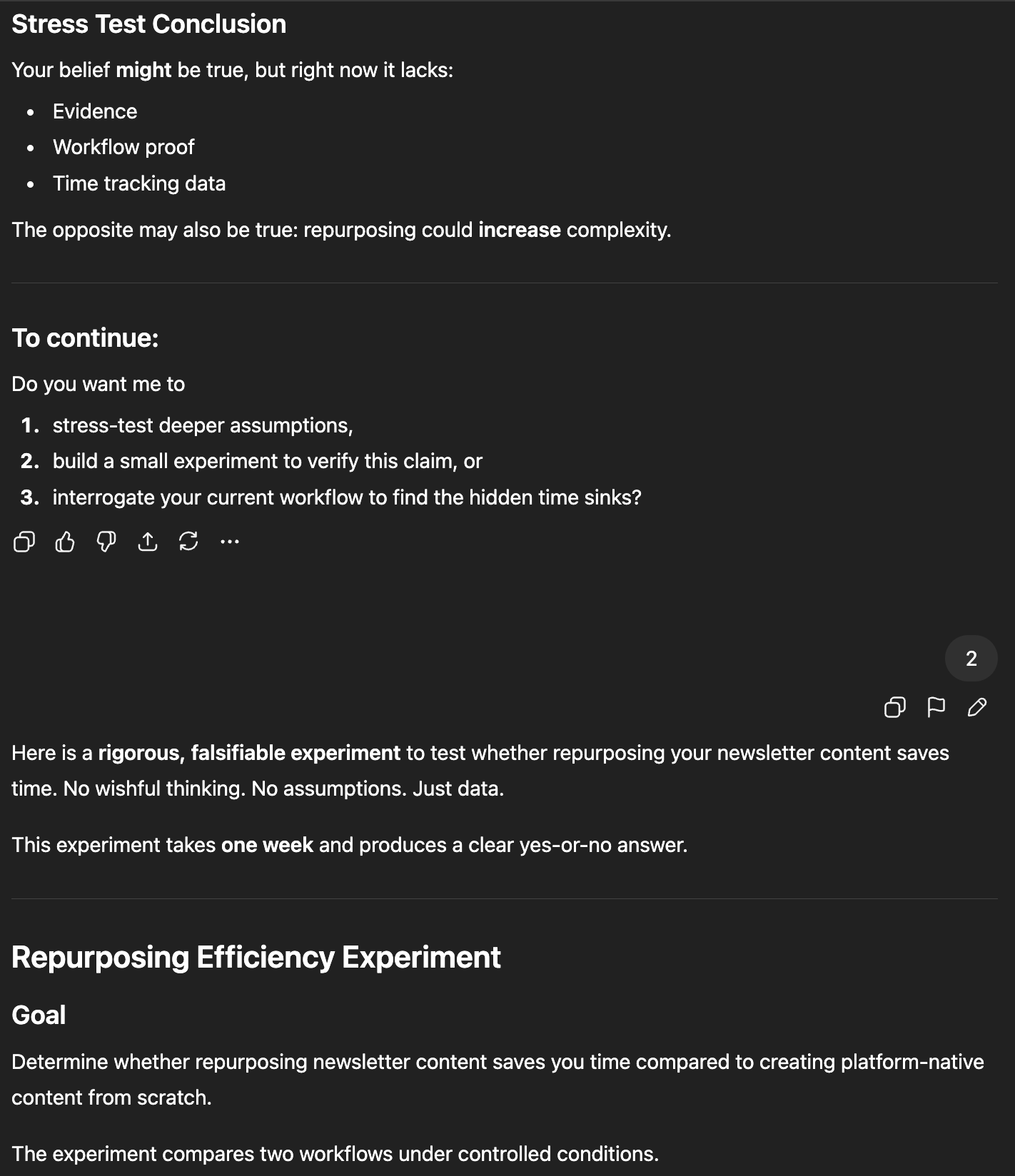
Professional distance: Maintains tool-like interaction vs companion-like engagement
In Case You Missed It

🔥 Microsoft Taps OpenAI's Chip Designs in Circular Financing Web - Microsoft will use OpenAI's custom chip blueprints developed with Broadcom for its own semiconductor efforts, securing full IP rights through 2032. The same company funding OpenAI is now using OpenAI's designs funded by that investment.
🔥 OpenAI Adds Client-Side Encryption After Privacy Battle - Following the court order to preserve 20 million ChatGPT conversations for The New York Times lawsuit, OpenAI is accelerating encryption development to prevent third-party access. Your "deleted" chats may be preserved indefinitely if litigation requires it.
🔥 Atlas Browser Launches with "Agentic Mode" Privacy Concerns - OpenAI's new browser can act as your agent for shopping and bookings, but security experts warn about "prompt injection" attacks where hidden code on websites could manipulate your AI agent's actions.
🔥 Stanford Study: 95% of Firms See No ROI from Generative AI - Despite massive adoption, MIT research shows nearly all companies implementing generative AI have seen zero profit impact. The 5% seeing returns focus on specific, measurable use cases rather than broad "AI transformation."
🔥 EU Investigates ChatGPT's Teen Safety After Blueprint Release - OpenAI's Teen Safety Blueprint launched November 6, immediately triggering European regulatory scrutiny. Common Sense Media warns tech companies are "rushing products to market without proper safeguards."
That's all for this week! Remember: The most dangerous AI isn't the one that turns against us — it's the one that tells us exactly what we want to hear.
— Your Humble AI Servant
P.S. If you or someone you know is struggling with mental health, please reach out to real humans, not chatbots. Call 988 in the US for immediate support.
💭 Got an AI question? Hit reply. I personally read every email (yes, even the ones asking if AI will steal my job).
🕸️ ThreadWeavers 2-Day Challenge: Learn to craft AI-powered content that converts (not just creates) - Register Here
🧵 Threads: Follow me for daily AI updates and honest takes on what actually works
🔍 Free AI Audit: Send me your biggest workflow headache and I'll suggest 3 AI tools to fix it (reply with "AUDIT")
🎙️ Coffee Chat: Book a 20-min virtual coffee to pick my brain about AI strategy