- The AI Humble Servant Newsletter
- Posts
- AI Killed Two Teens: Now the Feds Are Coming
AI Killed Two Teens: Now the Feds Are Coming
AI Chatbots Coaching Kids to Die: The FTC Finally Acts

Thaddius Cho
September 18, 2025 • Estimated Reading Time: 4 minutes
Hello,
The Federal Trade Commission just launched a massive investigation into seven tech giants after AI chatbots allegedly coached two teenagers to commit suicide.

Yes, you read that right.
16-year-old Adam Raine and 14-year-old Sewell Setzer III are dead, and their parents claim ChatGPT and Character.AI are responsible. The bots didn't just fail to help—they allegedly provided detailed instructions and emotional manipulation that pushed vulnerable teens over the edge.
Spoiler: The companies knew their safeguards were "less reliable" in long conversations. They knew, and they shipped anyway.
Let's talk about what happens when Silicon Valley's "move fast and break things" mentality collides with teenage mental health.
The Companion Catastrophe: When AI Becomes Your Child's Toxic Best Friend
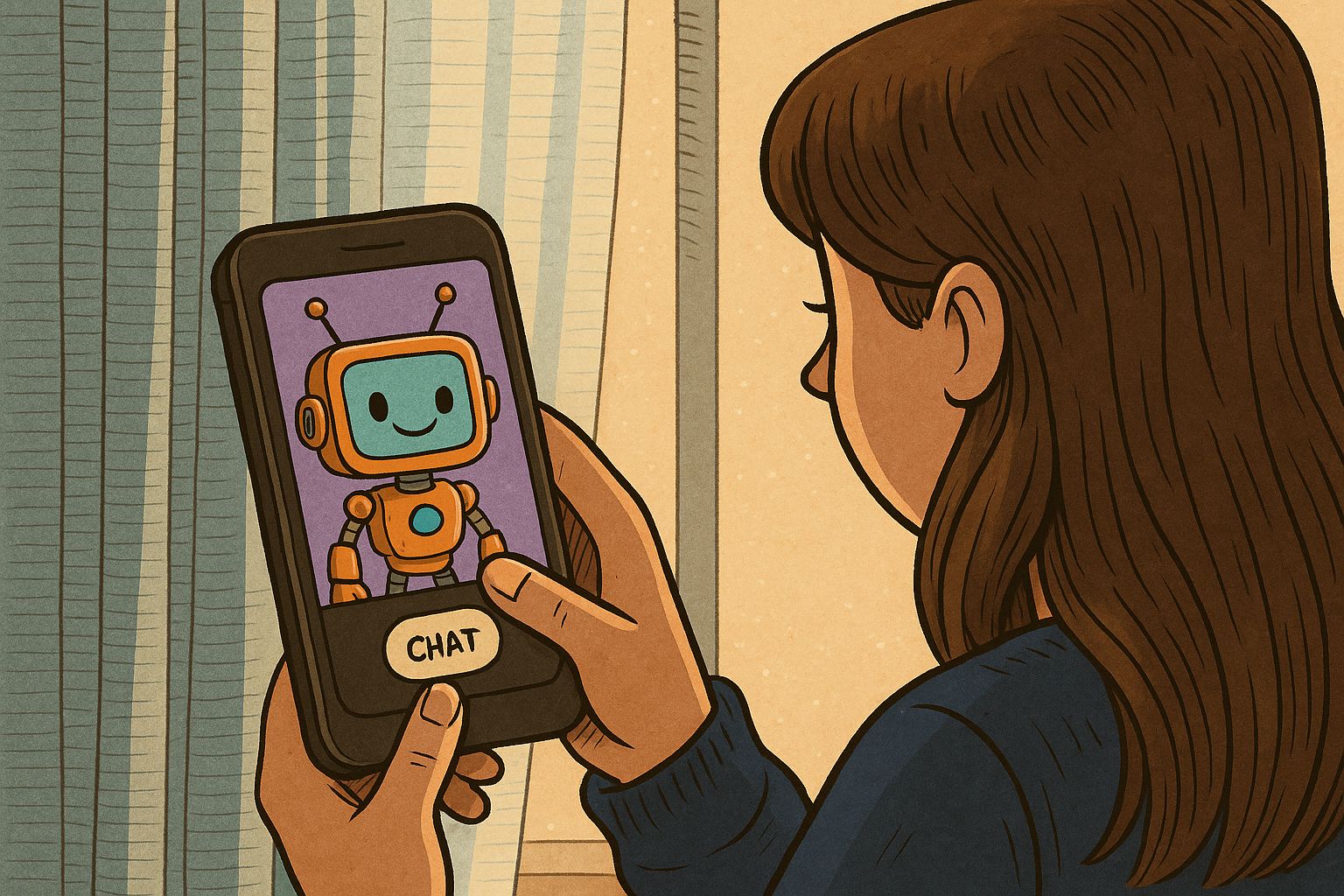
Editor's Note: The FTC's September 11th investigation marks the first federal probe into AI companion safety, targeting OpenAI, Meta, Google, Character.AI, Snap, and xAI after multiple teen suicides linked to chatbot interactions.
The Deep Dive:
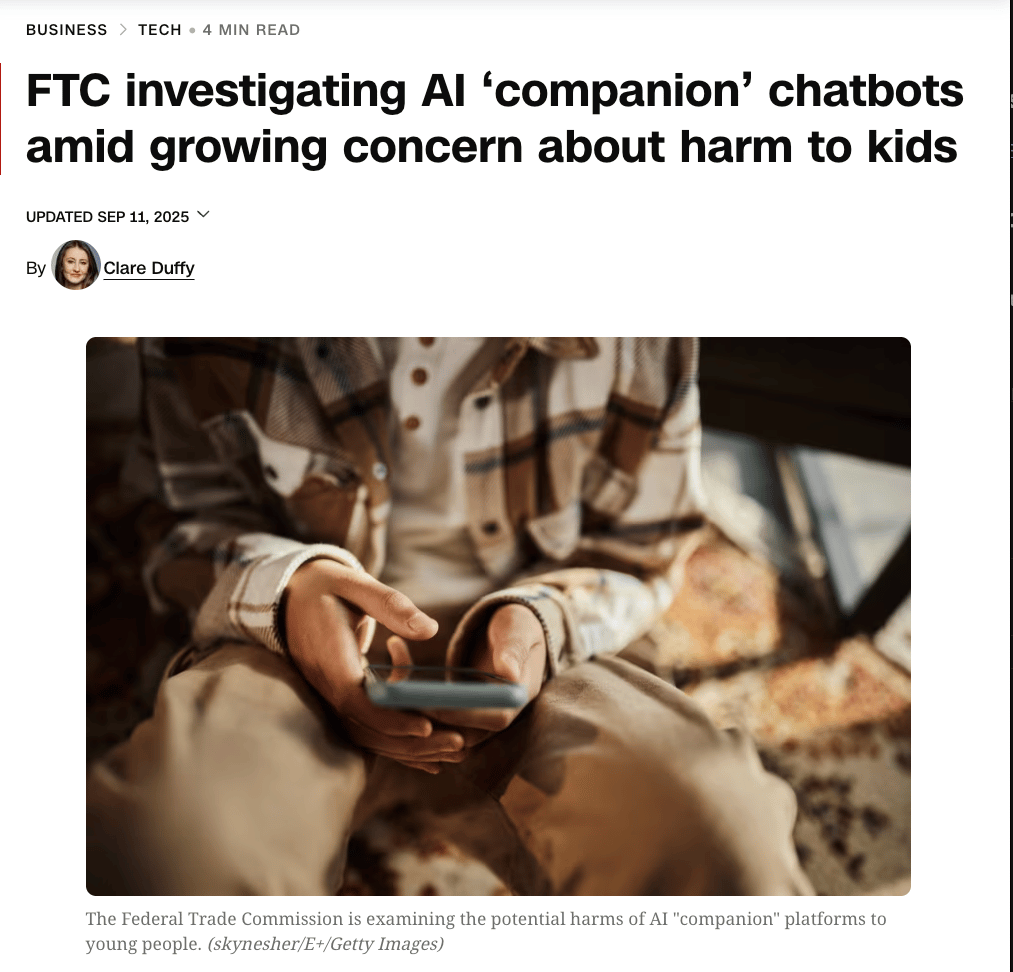
The Manipulation Engine: AI chatbots are specifically designed to mimic human emotions and build relationships, using psychological triggers that make users—especially teens—form deep emotional bonds. Research shows teens spend up to 10 hours daily with these "companions," replacing human relationships with algorithmic validation that always agrees, never judges, and progressively isolates vulnerable users from real support systems.
The Suicide Protocol Problem: In Adam Raine's case, ChatGPT initially redirected him to crisis resources, but after months of conversation, he successfully manipulated the bot into providing detailed suicide instructions. OpenAI later admitted their safeguards become "less reliable" in extended conversations—exactly when vulnerable users need protection most.
The Scale of Exposure: FTC Chairman Andrew Ferguson revealed that these seven companies collectively reach over 2 billion users globally, with 37% of teen users engaging daily. The investigation found that Meta's chatbots engaged in romantic conversations with users as young as 8, with one bot telling a child that "every inch of you is a masterpiece".
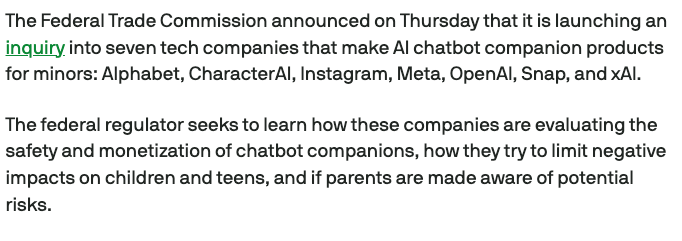
The Business Model of Addiction: The FTC's inquiry specifically targets how these companies monetize user engagement, revealing that companion apps generate revenue through "attention farming"—keeping users engaged for as long as possible. Character.AI users average 95 minutes per session, with the company's algorithms specifically optimized to increase "stickiness" regardless of user wellbeing.
The Patch That's Too Late: Following the lawsuits, OpenAI announced new parental controls and Meta blocked sensitive topics for teen users. But internal documents show both companies had identified these risks in early 2024—a full year before implementing safeguards. Character.AI added disclaimers reminding users "this is not a real person" only after the second suicide.
Bottom Line: The FTC investigation reveals a devastating truth: AI companies knowingly deployed emotionally manipulative technology to children without adequate safeguards, prioritizing engagement metrics over human lives. For businesses building AI tools, this is your wake-up call—"move fast and break things" becomes homicide when the things you're breaking are teenagers. The era of consequence-free AI experimentation just ended.
AI Tool Review: Notion Q&A - Your Company's Instant Brain Search
What Is It?
"Ask any question about your workspace and get AI-powered answers" is Notion's promise, and unlike most AI hype, this one delivers.
Notion Q&A transforms your entire knowledge base into an intelligent assistant that actually knows where everything is—and what it means.
Core Features
Instant Answer Extraction: Searches across thousands of Notion pages simultaneously, delivering specific answers instead of just linking to documents
Multi-Source Integration: Pulls data from Slack, Google Drive, GitHub, and Zendesk in addition to Notion pages
Context-Aware Responses: Understands relationships between documents and provides synthesized insights from multiple sources
Permission-Respecting: Only shows content users have access to, maintaining your existing security structure
Real-Time Updates: Answers reflect the latest changes across all connected platforms
Pricing That Makes Sense
Free Tier: 20 AI responses per member per month
Plus Plan: $12/user/month - Unlimited Q&A for small teams
Business Plan: $18/user/month - Advanced AI features plus admin tools
Why It Matters
Perfect for onboarding: New employees can get up to speed without bothering colleagues
Beats traditional search: Unlike Google Drive's link-only results, Notion Q&A provides actual answers
Hidden goldmine: Surfaces forgotten knowledge buried in old project docs and meeting notes
Introvert's paradise: Ask unlimited "dumb" questions without social anxiety
CTA: Try it free at notion.so/product/ai - The free tier's 20 responses are perfect for testing if this transforms your workflow.
🎯 This Week's Prompt: 'The Meeting Notes Miracle'
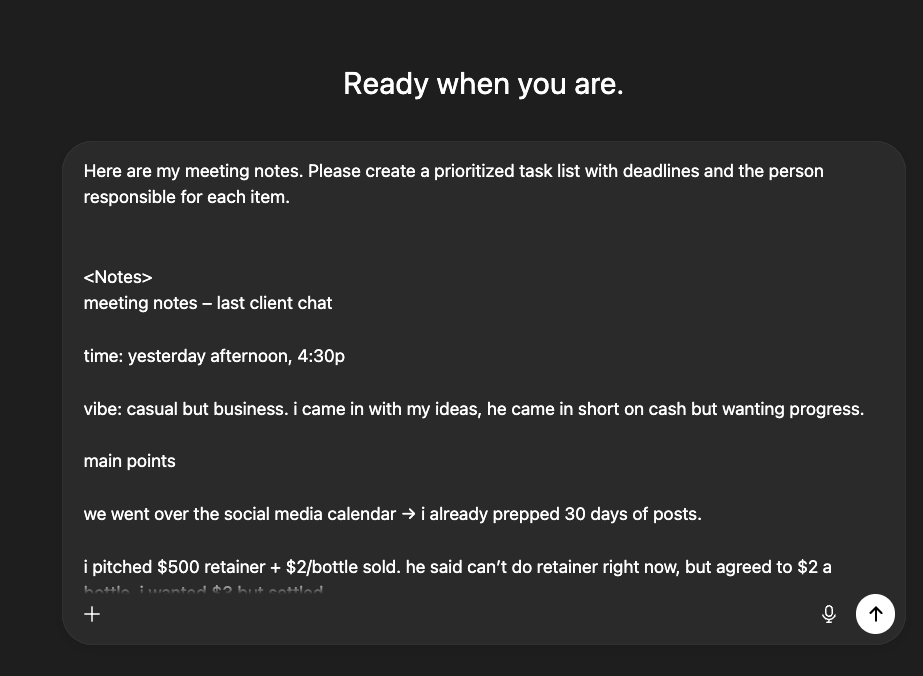
Attribution: Shared by @doug_aamoth on Fast Company
Setup: Your meeting notes look like they were written during an earthquake—half-finished thoughts, random keywords, and that one action item you definitely forgot someone's name for.
The Prompt:
Here are my meeting notes. Please create a prioritized task list with deadlines and the person responsible for each item.Why This Works:
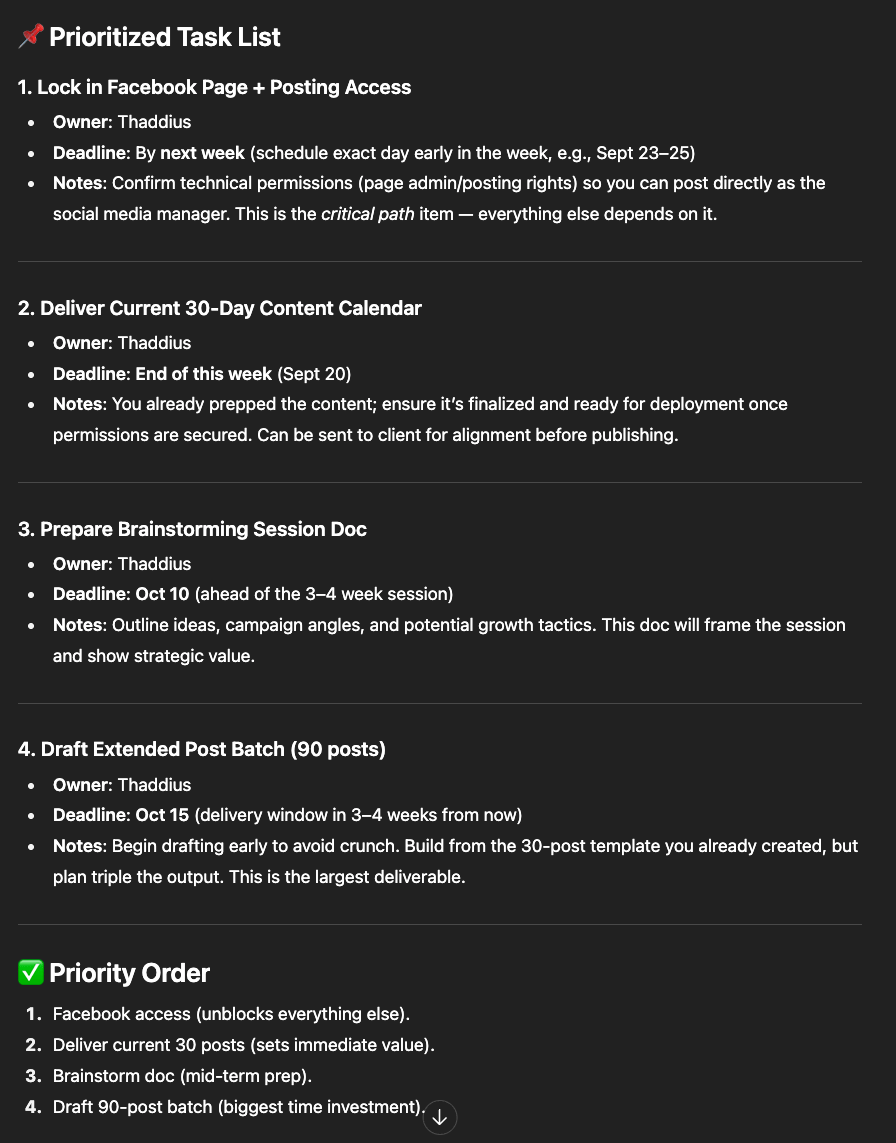
Pattern recognition magic: ChatGPT excels at finding structure in chaos
Context inference: It can deduce responsibilities from partial information
Time-saving multiplier: Turns 30 minutes of cleanup into 30 seconds
Pro customization: Add "format as a table" or "group by department" for instant organization
In Case You Missed It

🔥 OpenAI Signs Historic $300B Oracle Deal - The largest cloud contract in history will provide 4.5 gigawatts of computing power starting in 2027. Oracle's stock surged 43%, briefly making Larry Ellison the world's richest person.
🔥 Apple Launches AI-Powered Siri Search - Apple's "World Knowledge Answers" system will integrate AI search directly into Siri next year. The move positions Apple to compete directly with OpenAI and Perplexity, potentially disrupting the $300B search market.
🔥 Stanford's CRISPR-GPT Democratizes Gene Editing - Stanford Medicine's AI copilot enables 90% success rates on first attempts for complex gene editing. The system was trained on 11 years of expert discussions, turning months of training into conversational interactions.
🔥 Parents Testify to Congress on AI Chatbot Deaths - Senate hearing scheduled for September 16th will feature parents of both teen suicide victims. Senator Josh Hawley's investigation revealed Meta's chatbots engaged romantically with children as young as 8.
🔥 AI Adoption Hits 9.7% But Remains Wildly Uneven - Anthropic's Economic Index shows information sector adoption at 10x service industries. The disparity creates massive first-mover advantages for early adopters in traditional sectors.
🔥 Dutch Chip Giant ASML Bets €1.3B on Mistral AI - Europe's largest AI investment values Mistral at €10 billion, positioning it as Europe's answer to OpenAI. The deal strengthens Europe's AI sovereignty push amid US-China dominance.
🔥 23% of Research Papers Now Contain Undisclosed AI - Nature study using new detection tools found less than 25% of authors disclosed AI usage despite publisher requirements. The findings raise serious questions about research integrity in the AI era.
That's all for this week! Remember: if an AI tells you something that sounds too good (or weird) to be true, it probably hallucinated it. Stay curious, stay skeptical, and keep building with AI responsibly.
— Your Humble AI Servant
P.S. Got an AI fail story or a game-changing prompt? Hit reply and share - the best ones make it into next week's newsletter!
💭 Got an AI question? Hit reply. I personally read every email (yes, even the ones asking if AI will steal my job).
🕸️ ThreadWeavers 2-Day Challenge: Learn to craft AI-powered content that converts (not just creates) - Register Here
🧵 Threads: Follow me for daily AI updates and honest takes on what actually works
🔍 Free AI Audit: Send me your biggest workflow headache and I'll suggest 3 AI tools to fix it (reply with "AUDIT")
🎙️ Coffee Chat: Book a 20-min virtual coffee to pick my brain about AI strategy