- The AI Humble Servant Newsletter
- Posts
- AI Browsers Are Here: Google Chrome's Death Sentence?
AI Browsers Are Here: Google Chrome's Death Sentence?

Thaddius Cho
October 23, 2025 • Estimated Reading Time: 6 minutes
Hello,

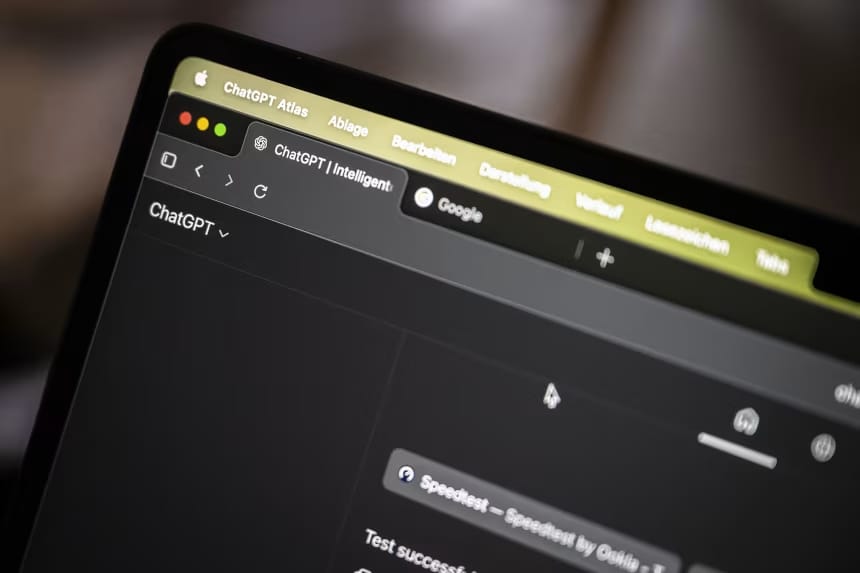
OpenAI just launched ChatGPT Atlas—a web browser where AI doesn't just help you search, it controls the web for you. Released October 21st for macOS, Atlas can summarize entire websites, write responses based on what you're reading, and handle multi-step research tasks autonomously through "Agent Mode."
Perplexity's Comet browser takes this even further.
It understands every tab you have open simultaneously and can book your flights, schedule meetings, and research across platforms—all without you copying and pasting between screens.
Yes, you read that right.
The browser wars just got invaded by AI that actually browses for you.
These aren't just better browsers—they're the first shot in a war to replace Google Chrome as the internet's default interface. And with Atlas already available as a free download and Comet targeting power users at $200/month, the question isn't if AI browsers will win, but who wins the AI browser wars.
Here's why 800 million ChatGPT users might soon abandon Chrome entirely, what this means for how we work online, and the privacy trade-off nobody's mentioning.
The Browser Revolution: AI Takes Control of the Web
Editor's Note: ChatGPT Atlas's October 21st launch marks AI's invasion of the browser market—challenging Google Chrome's dominance by transforming the browser from a passive window into an active agent. Combined with Perplexity's Comet's cross-tab intelligence, we're witnessing the birth of truly agentic web browsing.
The Chrome Killer
OpenAI's Atlas browser integrates ChatGPT directly into every browsing session through a persistent sidebar. Unlike Chrome extensions that bolt AI onto an existing browser, Atlas is built for AI-first interaction. You're reading a dense research paper? Ask Atlas to summarize the methodology in 3 bullet points. Need to write a response email? Atlas drafts it based on the context of what you're currently viewing.
The Washington Post notes the "browser memories" feature is the real game-changer—if you enable it, Atlas remembers your browsing context over time, providing increasingly personalized assistance. But this creates an immediate privacy calculation: give Atlas access to your browsing history for convenience, or maintain privacy by keeping it siloed?
CNN's coverage emphasizes Atlas represents OpenAI's direct challenge to Google's search and browser monopoly. With ChatGPT already processing 6 billion API tokens per minute, OpenAI has the infrastructure and user base to actually pull this off.
The Wild Card: Comet's Cross-Tab Superpowers
But Perplexity's Comet browser makes Atlas look conservative. Built on Chromium with Perplexity's AI models integrated, Comet doesn't just understand one webpage—it understands all your open tabs simultaneously. Planning a trip? Comet can pull flight times from United's site while cross-referencing your calendar and suggesting hotels near your meetings, all without you switching tabs.
The implications for knowledge workers are massive. According to user reports, Comet eliminates the "47-tab problem"—that moment when your browser becomes an unnavigable mess because you're trying to hold context across too many sources. Instead of manually synthesizing information across tabs, you simply ask Comet: "What are the main counterarguments to the proposal I'm reading?"
At $200/month as part of Perplexity Max, Comet is positioned as a premium tool for power users who live in their browsers. Early testers report it's like having a research assistant who never loses track of what you were doing.
The Agent Mode Arms Race
Atlas's "Agent Mode" preview and Comet's automated task execution signal where this is heading: browsers that don't just show you the web, but navigate it autonomously on your behalf. Need to compare prices across 10 e-commerce sites? The browser does it. Want to schedule a meeting based on everyone's availability? Done automatically.
USA Today's coverage highlights this creates both opportunity and risk for small businesses. On one hand, automation of repetitive research tasks could save hours weekly. On the other, freelancers already facing 2-5% income declines from AI substitution now face browsers that can automate the research work many charge for.
The Privacy Paradox
Both browsers force a fundamental trade-off: convenience versus privacy. Atlas's browser memories mean giving OpenAI access to your complete browsing history. Comet's cross-tab awareness means Perplexity can see everything you're working on simultaneously.
For SMBs handling sensitive client information, this creates immediate compliance questions. Can you use these browsers for HIPAA-covered health data? What about financial advisory work? The productivity gains are real, but so are the data exposure risks.
The Washington Post's analysis notes we're entering an era where the browser itself becomes a surveillance mechanism—not for ads, but for AI training. Every page you visit, every query you make, potentially feeds the models getting smarter.
Bottom Line
The AI browser wars have begun, and they're not competing on speed or features—they're competing on how much of your work they can do for you. Atlas brings AI browsing to the mainstream for free, while Comet targets professionals willing to pay $200/month for cross-tab superpowers.
For freelancers and SMBs, the calculation is simple: early adopters gain hours of productivity, but late adopters risk falling behind as clients expect faster research turnarounds. The uncomfortable truth? Your next competitor might not be another human—it might be someone using an AI browser that works 10x faster than yours.
For more context, read OpenAI's official Atlas announcement and watch Perplexity's Comet demo video.
AI Tool Review: Perplexity Comet - The Browser That Browses For You
What Is It?
Perplexity Comet is the AI-powered browser that "browse[s] at the speed of thought." Unlike traditional browsers where you navigate between tabs and synthesize information, Comet understands every tab you have open simultaneously and can take actions across websites on your behalf—booking calendar events, organizing research, and drafting emails without you copying and pasting.
Core Features
Cross-Tab Context Awareness: Understands content across all open tabs at once—like having a photographic memory of your entire browsing session
Automated Task Execution: Books flights, schedules meetings, and organizes tabs based on natural language requests
Multi-Platform Research: Can pull LinkedIn data while you're reading Twitter, compare products across 10 e-commerce sites, or synthesize counterarguments from academic papers
Conversational Interface: Ask questions about any page content without leaving your current tab
Built on Chromium: Familiar Chrome-like interface with Perplexity's AI models integrated natively
Why It Matters
Eliminates the "47-Tab Problem": No more losing context across dozens of open tabs—Comet holds it all simultaneously
Actually Saves Time: Early users report slashing research time by 40-50% on multi-source projects
Research Without Rabbit Holes: Get synthesized insights and counterpoints without opening 20 new tabs
Preview of the Future: Shows where all browsers are heading—Google, OpenAI, and Microsoft are all building similar capabilities
Premium Positioning: At $200/month, this isn't mass market yet—but the capabilities will likely become standard (and affordable) within 12-18 months
Try it: Join the Perplexity Max waitlist or use free Perplexity search to experience their AI approach before committing.
🎯 This Week's Prompt: 'The LinkedIn Thought Leader Generator'
Attribution: Featured in Forbes article by Rachel Wells exploring how prompt engineering skills can boost salaries up to 47% according to AWS and Indeed research.
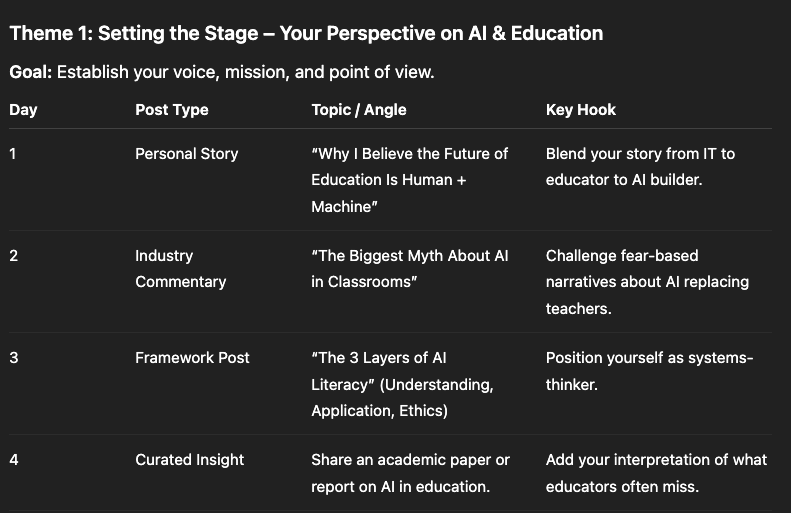
Setup: Most professionals struggle to maintain consistent thought leadership content on LinkedIn. This "Persona Prompting" technique transforms ChatGPT into a specialized ghostwriter who understands platform-specific best practices.
The Prompt:
Imagine you are a ghostwriter for LinkedIn. Assist me in
compiling a content calendar filled with LinkedIn post ideas
aimed at establishing my thought leadership in [YOUR INDUSTRY]
over the next 30 days.

Why This Works:
Role Specialization: By assigning the "ghostwriter for LinkedIn" persona, you get platform-specific insights rather than generic social media advice
Time Efficiency: Generates a month of content ideas in minutes, automating the most time-consuming part of content strategy
Thought Leadership Focus: The framing specifically requests ideas that position you as an expert, not just another poster
Customization Power: Simply replace [YOUR INDUSTRY] with your field—email marketing, real estate investing, SaaS sales, etc.
Pro Tip: After getting your calendar, ask follow-up prompts for each post: "Write the full LinkedIn post for day 5 in my voice, including a hook, 3 key insights, and a thought-provoking question." This creates ready-to-publish content while maintaining your unique perspective.
In Case You Missed It

t
🔥 OpenAI Turns ChatGPT Into an App Platform - The Apps SDK launched October 6th, letting developers build applications that run inside ChatGPT conversations. Spotify, Canva, Zillow, and Figma already integrated, creating what analysts call "AI's App Store moment".
🔥 Microsoft Deploys Copilot to 1 Billion Windows 11 Devices - Copilot Voice, Vision, and Actions now come standard with "Hey Copilot" voice activation, making ambient AI assistance the Windows default.
🔥 Freelancer Income Drops 2-5% Where AI Competes - Comprehensive research reveals top-performing, higher-priced freelancers face disproportionate pressure as AI "levels the playing field," enabling cheaper alternatives to produce comparable work quality.
🔥 AI Scaling May Be Hitting Limits - Sara Hooker, Cohere's former VP of AI Research, launched a startup explicitly betting against "scaling-pilled approaches" as MIT research suggests the largest models may show diminishing returns.
🔥 Only 5% of AI Projects Show Business Impact - MIT studies reveal 85% of enterprise AI projects fail to deliver measurable P&L improvements, with critics warning of circular AI deals reminiscent of dot-com bubble.
🔥 Meta Cuts 600 AI Jobs Despite Massive Investments - The layoffs in Meta's AI division occurred weeks after the company announced major infrastructure investments, raising questions about AI business model sustainability.
🔥 OpenAI Partners with Broadcom for Custom AI Chips - The multibillion-dollar deal will deliver chips requiring 10 gigawatts of electricity by 2029—equivalent to powering 4 million homes—as the AI infrastructure arms race accelerates.
Closing
That's all for this week! Remember: when the browser itself becomes your AI assistant, the question isn't whether you'll switch—it's whether you'll switch fast enough to stay competitive.
— Your Humble AI Servant
P.S. Have you tried Atlas yet, or are you waiting to see how the privacy issues shake out? Hit reply and tell me if you're early adopting or staying cautious—I'm tracking how small businesses are handling this shift.
💭 Got an AI question? Hit reply. I personally read every email (yes, even the ones asking if AI will steal my job).
🕸️ ThreadWeavers 2-Day Challenge: Learn to craft AI-powered content that converts (not just creates) - Register Here
🧵 Threads: Follow me for daily AI updates and honest takes on what actually works
🔍 Free AI Audit: Send me your biggest workflow headache and I'll suggest 3 AI tools to fix it (reply with "AUDIT")
🎙️ Coffee Chat: Book a 20-min virtual coffee to pick my brain about AI strategy